Science
We are a small team of an internist, a pharmacist and a health economist - and we publish our own research. On this page you will find our own publications and the most important independent studies we draw on for Berberstin (berberine from barberry) and Suxero® (mulberry leaf extract with 1-DNJ). Everything with a source, nothing without context.
🌿 Berberstin = Liver & blood lipids
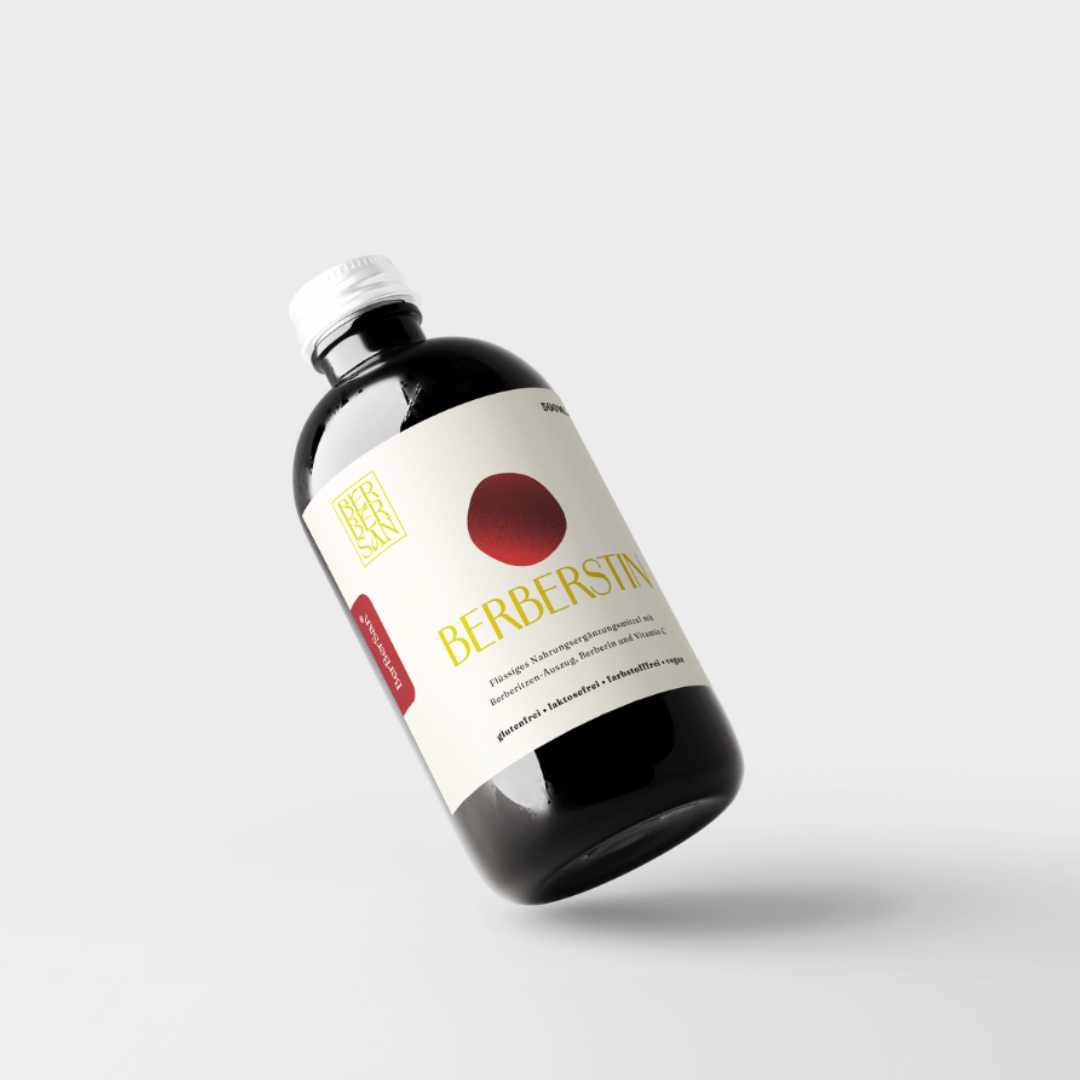
Active compound: berberine (100 mg per 15 ml). Research focus: LDL cholesterol, triglycerides, liver fat. Taken in the morning on an empty stomach.
🍃 Suxero® = Blood sugar
Active compound: 1-deoxynojirimycin (1-DNJ, 15 mg per 15 ml) from mulberry leaf, plus chromium. Research focus: blood sugar and insulin after a meal. Taken before eating.
Our own publications
Peer-reviewed and published in medical journals - together with the University of Manitoba (Canada).
Berberine: A Bitter Phytochemical With Diversely Sweet Therapeutic Properties
Sikora B, Bahadori B, Magg AD, Moghadasian N, Moghadasian MH. Nutrition Reviews (Oxford University Press), September 2025. Type: review article.
A critical summary of the in vitro, animal and clinical data on berberine - with a focus on lipid metabolism, blood sugar, the liver and inflammation. The data appear particularly promising in type 2 diabetes; at the same time, the authors stress that larger studies are needed.
A Berberine-containing combination preparation and ultrasound-derived fat fraction in hepatic steatosis: a single-center observational case series
Sikora B et al. European Journal of Medical Case Reports, 2026. Type: observational case series, single centre, no control group.
Our own observation with Berberstin: liver fat was measured by ultrasound (Siemens Healthineers UDFF) before and after about seven weeks. The data point to a marked decrease in the liver fat fraction and to favourable changes in LDL and triglycerides. Context: small number of participants, no placebo group - a signal that we want to test in a controlled study, not proof of effect.
Antibiotic-free management of Helicobacter pylori infection using liquid berberine, probiotics, and proton pump inhibitor
Sikora B et al. European Journal of Medical Case Reports 10(9), 2026. Type: single case report.
A documented case in which an H. pylori infection was managed without antibiotics. A case report describes exactly one person and does not allow generalisation - it is the starting point for a question, not its answer.
Mulberry and type 2 diabetes - review article (under review)
With the University of Manitoba. Submitted in 2026. As soon as the paper has been published, we will link it here.
Our own observation with Suxero® shots (2026, unpublished)
Observational crossover with eight complete data sets: a standardised meal (white bread with jam) once without and, after a one-week break, once with a mulberry leaf shot, blood sugar fasting and 30, 60, 120 and 180 minutes afterwards. The format was a 60 ml shot, not the 500 ml bottle. We are preparing a publication; until then the following applies: n = 8, no blinding, no generalisation.
🌿 Berberine: what the literature shows
Independent work that was not carried out with Berberstin. Doses in studies are mostly 0.5 to 1.5 g of berberine per day - well above the 100 mg in one dose of Berberstin. This is a deliberate difference: Berberstin is a food supplement, not a medicine.
- Cholesterol - mechanism. Kong W et al., Nature Medicine 2004: berberine increases the number of LDL receptors in liver cells via a pathway independent of statins. Type: laboratory and clinical pilot data. nature.com/articles/nm1135
- Type 2 diabetes and microbiome. Zhang Y et al., Nature Communications 2020: in a randomised study, berberine altered gut bacteria and bile acids in newly diagnosed type 2 diabetes. Type: RCT. nature.com/articles/s41467-020-18414-8
- Excess weight. Biomedicine & Pharmacotherapy 2020, review on berberine and body weight. Type: review. PubMed 32353823
- Microbiome. Pharmacological Research 2020, berberine and gut flora. Type: review. PubMed 32105754
- Absorption through the oral mucosa. PubMed 26206195 - basis for our recommendation to hold Berberstin briefly in the mouth. Type: pharmacokinetic study.
- Safety. In 2026, EFSA put a draft on the safety of berberine-containing plant preparations out for consultation; BerBerSan® has submitted a comment. Berberstin is not suitable for pregnant or breastfeeding women, children, or people on long-term blood thinners.
🍃 Mulberry leaf and 1-DNJ: what the literature shows
1-Deoxynojirimycin (1-DNJ) inhibits the enzyme α-glucosidase in the small intestine, which breaks carbohydrates down into sugar. As a result, glucose enters the blood more slowly. The following studies were carried out with various mulberry leaf preparations, not with Suxero®; what matters in each case is the amount of 1-DNJ. Suxero® provides 15 mg of 1-DNJ per dose.
- Dose-response with a full meal. Thondre PS et al., Nutrients 2024: 37 healthy adults, double-blind, placebo-controlled, crossover. 200, 225 and 250 mg of an extract standardised to 5% 1-DNJ (= 10 to 12.5 mg 1-DNJ) before white bread with egg reduced the glucose area over two hours by 30 to 33% and the insulin area by 31 to 38% compared with placebo. Type: RCT, funded by the manufacturer (Phynova). doi.org/10.3390/nu16111670
- Dose-dependent in impaired fasting glucose. Asai A et al., Journal of Diabetes Investigation 2011: 3, 6 or 9 mg 1-DNJ before 200 g of rice dampened the rise in blood sugar in a dose-dependent manner; over 12 weeks the marker 1,5-anhydroglucitol improved, while HbA1c and fasting glucose remained unchanged. Type: RCT, two study parts, n = 12 and n = 76. doi.org/10.1111/j.2040-1124.2011.00101.x
- Prediabetes, 4 weeks. Kim JY et al., Journal of Medicinal Food 2015: 36 people with raised fasting glucose, double-blind; after four weeks a flatter glucose and insulin curve following a carbohydrate load. Type: RCT. doi.org/10.1089/jmf.2014.3160
- Type 2 diabetes, with chromium. Mohamed M et al., Diabetes Therapy 2023 (Nestlé Health Science): 30 people with type 2 diabetes; 250 mg of mulberry leaf extract (12.5 mg 1-DNJ) with fibre, vitamin D and chromium reduced the glucose area after breakfast by 20% (1 h) to 15% (3 h). Type: RCT, crossover. doi.org/10.1007/s13300-023-01379-4
- Glycaemic index of sugar and starch. Wang R et al., Medicine 2018: mulberry leaf extract lowered the GI of sucrose by 34%, of maltose by 53% and of maltodextrin by 31%, and that of pure glucose hardly at all - consistent with the mechanism, because glucose no longer needs to be broken down. Type: randomised, open-label, n = 15. doi.org/10.1097/MD.0000000000011996
- Everyday life with a glucose sensor. Shinkawa Y et al., Nutrients 2025: 31 people drank mulberry leaf tea before meals for two weeks; measured with CGM, glucose variability decreased, without hypoglycaemia or noticeable liver and kidney values. Type: RCT, crossover. doi.org/10.3390/nu17142308
- Meta-analyses. Phimarn W et al., European Journal of Nutrition 2017 (13 RCTs): mulberry preparations lowered blood sugar 30, 60 and 90 minutes after eating, with no effect on fasting glucose, HbA1c or blood lipids; no serious side effects. doi.org/10.1007/s00394-016-1197-x · Jeong HI et al., 2022: confirms the effect on glucose and insulin after a meal and calls for larger studies. doi.org/10.1155/2022/9282154 · Yu JT et al., IJMS 2025 (15 RCTs, 1,202 participants): improvements in fasting glucose, HbA1c, LDL and triglycerides, stronger at doses below 500 mg/day. doi.org/10.3390/ijms26178380