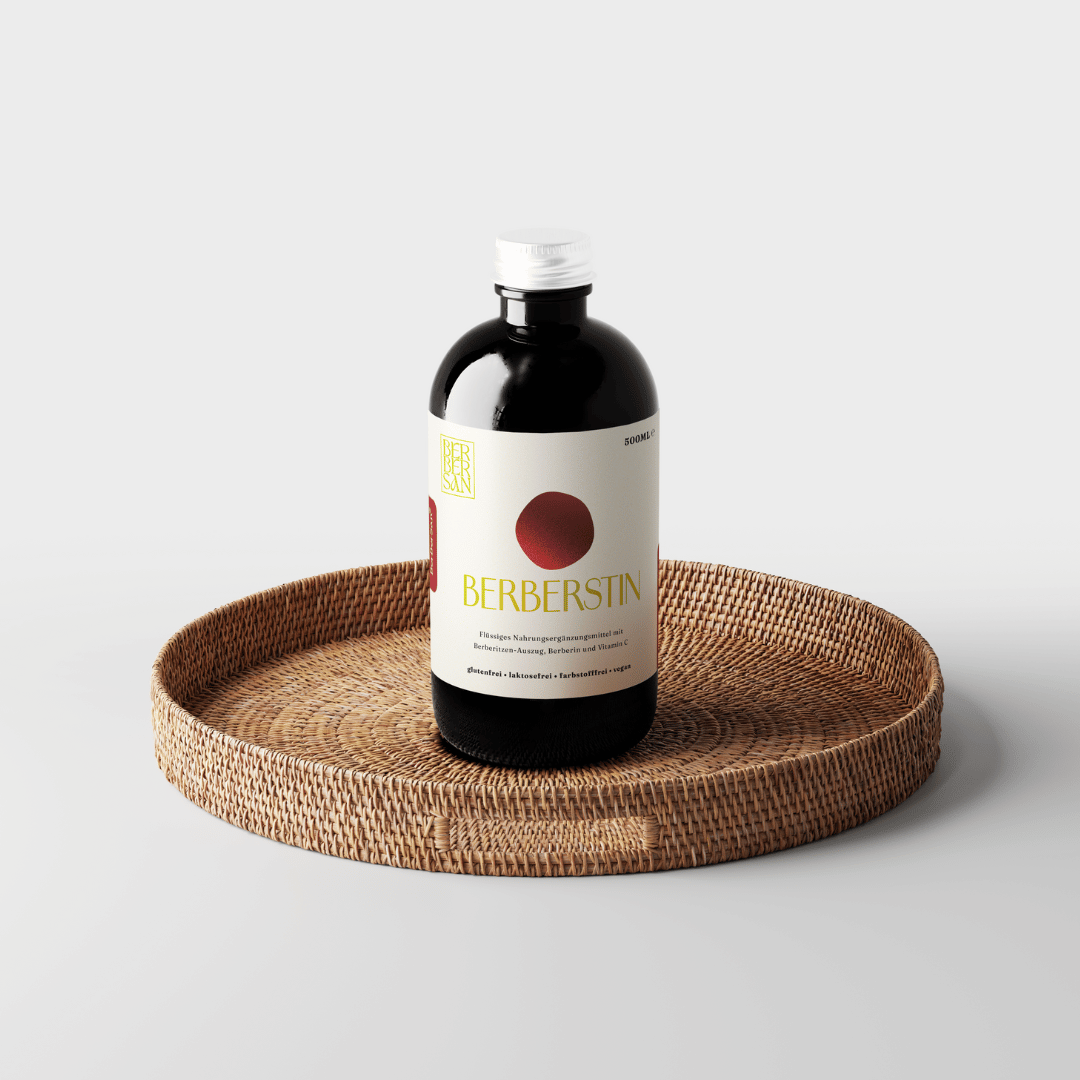
BerBerSan


🌱 Why do Persians eat barberries with fatty, sumptuous meals? 🌱
Dr Babak Bahadori on the creation of BerBerSan ™ "Many years ago, Dr. Eva-Maria Steinkellner surprised me with a question that has stuck with me to this day. She is not only a valued colleague, but also one of the best nutrition experts in Austria. One Sunday, I kept my long-held promise and prepared Persian barberry rice with saffron for Eva-Maria. When she noticed from my expression that I wasn't sure of the answer myself, she explained to me that #berberine, the main active ingredient in barberry, has a cholekinetic effect and thus supports the digestion of fatty foods. Embarrassed by my lack of knowledge about the plant from my own culture, I began to intensively study the phytopharmaceutical effects of barberry—a journey that took me deep into my past and traditional Persian medicine (TPM). The multitude of scientific studies demonstrating positive effects of berberine on diabetes, lipid metabolism disorders, and liver and gallbladder diseases surprised me. Shortly thereafter, I experienced the first success with one of my patients after gallbladder surgery (post-cholecystectomy syndrome) when I prepared a barberry tea based on an old Persian recipe, which was able to alleviate his symptoms. When I explained this effect to my scientific partner Bernhard Sikora, he was enthusiastic. Initially, the idea was to compile all scientific findings on barberries into one book. Thanks to the tremendous support and expertise of Dr. Afsaneh Gächter, this book became a reality. Shortly after its publication, Bernhard came up with the idea of standardizing the production of barberry tea. This vision would never have become reality without the support of Dr. pharm. Agnieszka Magg, an outstanding pharmaceutical specialist with many years of research experience in China. After intensive research and hard work, BerBerSan™ was finally created – a unique berberine juice that has proven itself in practice as a supportive measure for metabolic diseases and various liver and gallbladder diseases such as fatty liver. My deepest thanks go to everyone who contributed. Thanks to their commitment and expertise, tradition was transformed into true innovation. 🍃"
Learn more
Berberine and cholesterol: BerBerSan™ as natural support for your liver health
Cholesterol is a vital substance for our bodies, but too much LDL cholesterol, also known as "bad" cholesterol, can disrupt the balance in the body. Healthy cholesterol levels are closely linked to the function of our liver, which plays a crucial role in cholesterol management. But how can berberine, the natural active ingredient in BerBerSan™, support these processes? LDL cholesterol and the role of the liver LDL, or low-density lipoprotein, transports cholesterol throughout the body. However, an excess of LDL can lead to deposits in the blood vessels, which can place a strain on the cardiovascular system. The liver is responsible for breaking down LDL cholesterol and uses special receptors – so-called LDL receptors – to absorb and process cholesterol from the blood. How can berberine support natural balance? Berberine is known for its ability to influence the activity of these LDL receptors. Studies show that berberine can increase the number of these receptors in the liver, allowing for better absorption and processing of LDL. Thus, berberine naturally supports the body in maintaining cholesterol balance. Why BerBerSan™? BerBerSan™ provides berberine in liquid form, allowing for direct absorption through the oral mucosa, known as lingual absorption . This unique dosage form ensures that berberine is efficiently absorbed and immediately available to the body. Regular consumption of BerBerSan™ can be a natural addition to your daily health routine and help support your liver. Tips to support your liver In addition to taking BerBerSan™, you can also promote your liver health with a few simple tips: Balanced diet : Lots of vegetables, healthy fats and whole grain products can relieve the strain on your liver. Drink plenty of fluids : Water helps detoxify the body and support liver function. Regular exercise : Exercise can stimulate metabolism and support cholesterol management. Conclusion: BerBerSan™ as natural support for a healthy cholesterol balance Cholesterol balance is important for our well-being. BerBerSan™ offers a natural option to gently support the liver and maintain cholesterol balance. Complement your health routine with the power of berberine and naturally balance your cholesterol levels – with BerBerSan™.
Learn more
Weight loss with berberine: How GLP-1 activation can reduce hunger
Weight loss with berberine! 🌿⚖️ Berberine can activate the hormone GLP-1, which helps reduce your hunger and boost your metabolism. A natural support for anyone looking to improve their health! 💪 Linguistic absorption, meaning absorption through the oral mucosa, is crucial.
Learn more
Congratulations to BerBerSan™️ athlete Saied Noroozi
Our bodybuilding testimonial Saied Noroozi achieved third place at the Italian Open. Congratulations!
Learn more
New BerBerSan™ sponsorship! 🌿🥊
New BerBerSan™ sponsorship! 🌿🥊 We are delighted to welcome Christian Sikora to the BerBerSan™ family! 👏 Christian is not only a European kickboxing champion (Kicklight 94-) and a tattoo artist, but also a professor at a technical college. He relies on BerBerSan™ to support liver and gallbladder cleansing. 💪 As hard as his blows are, the bitter taste of the healthy BerBerSan kicks in. Are you brave enough? 💚
Learn more
Natural support for liver and gallbladder: How berberine can play an important role
Berberine helps your liver break down fat and toxins more efficiently and supports healthy bile function. 💪 #LiverDetox #Bile #HealthyLiver #Liver #BerberSan #Detox #Berberine
Learn more
Berberine and insulin sensitivity: Natural support for managing type 2 diabetes
Type 2 diabetes is on the rise worldwide and represents one of the greatest challenges for the modern healthcare system. At the heart of this disease is the body's impaired ability to regulate blood sugar levels. A crucial factor here is insulin sensitivity – the ability of cells to respond appropriately to the hormone insulin. Reduced insulin sensitivity means the body has to produce more insulin to process the sugar in the blood, which leads to elevated blood sugar levels in the long term. But how can berberine, a herbal active ingredient, support the natural management of type 2 diabetes? In this blog post, we take a look at the scientifically supported role of berberine in promoting insulin sensitivity and why it can be a valuable supplement for people with type 2 diabetes. What is insulin sensitivity and why is it so important? Insulin is a hormone produced by the pancreas that plays a key role in blood sugar metabolism. After a meal, insulin is released to transport sugar from the blood into the cells, where it is used for energy. However, when cells become less sensitive to insulin, the body must produce more insulin to regulate blood sugar levels. This reduced insulin sensitivity is the central feature of type 2 diabetes and, over time, can lead to chronic overload of the pancreas, which eventually becomes exhausted and can no longer produce enough insulin. This can lead to permanently elevated blood sugar levels and health complications. How can berberine support insulin sensitivity? Berberine is a plant alkaloid found in various medicinal plants, such as barberry. Used in traditional medicine for centuries, berberine has been increasingly studied in scientific research in recent years, particularly in relation to diabetes and blood sugar metabolism. One of the most interesting discoveries about berberine is its ability to improve insulin sensitivity . This means that berberine may help increase the cells' response to insulin, so less insulin is needed to transport sugar from the blood into the cells. Here are some of the mechanisms by which berberine may work: AMPK activation : Berberine activates the enzyme AMP-activated protein kinase (AMPK), also known as the "metabolic switch." AMPK plays an important role in regulating energy metabolism and helping to balance glucose levels in the body. AMPK activation promotes glucose uptake into cells, which may contribute to better blood sugar control. Promotes glucose transport : Berberine may also increase the activity of certain glucose transporters in cells, which are responsible for transporting sugar from the blood into the cells. This may lower blood sugar levels because more sugar is absorbed into the cells, where it is used for energy. Inhibition of glucose production in the liver : Another mechanism by which berberine may work is by inhibiting glucose production in the liver. In people with type 2 diabetes, the liver often produces too much glucose, leading to high blood sugar levels. Berberine may help slow this process and thus lower blood sugar levels. The role of berberine in the natural management of type 2 diabetes Type 2 diabetes is a chronic disease that requires careful and comprehensive treatment. A balanced diet, regular exercise, and sometimes medication are important pillars in diabetes management. Berberine may be a natural complement to these measures, as it can help improve insulin sensitivity and thus better control blood sugar levels. Unlike some medications, berberine works at multiple levels in the body, making it a promising agent for people with type 2 diabetes. Why is insulin sensitivity so crucial for people with type 2 diabetes? Improving insulin sensitivity is a key goal in managing type 2 diabetes. The better cells respond to insulin, the less insulin the body needs to produce to regulate blood sugar levels. This has several advantages: Reduced insulin requirements : When insulin sensitivity improves, the body needs less insulin to transport sugar from the blood into the cells. This relieves the strain on the pancreas and can help maintain insulin production over the long term. More stable blood sugar levels : Improved insulin sensitivity can lead to more stable blood sugar levels because sugar enters cells more efficiently. This reduces blood sugar fluctuations that often lead to fatigue, cravings, and long-term health complications. Long-term health benefits : By improving insulin sensitivity, the risk of diabetes complications such as cardiovascular disease, kidney damage, or nerve damage can be reduced. Berberine as part of a healthy lifestyle It's important to emphasize that berberine should not be considered a miracle cure or a standalone solution for type 2 diabetes. Rather, it is a supportive addition to a healthy lifestyle based on a balanced diet, regular exercise, and careful blood sugar control. Taking berberine can help improve insulin sensitivity, but should always be done in consultation with a doctor, especially if you are already taking medication. How can BerBerSan™ help with blood sugar control? BerBerSan™ is the world's first berberine juice and offers a simple and natural way to benefit from the potential benefits of berberine. By taking 15 ml of BerBerSan™ daily on an empty stomach, the active ingredient can be rapidly absorbed into the body, potentially providing effective support for insulin sensitivity. Berberine's unique lingual absorption through the oral mucosa enables rapid and direct action. Conclusion: Natural support for dealing with type 2 diabetes Berberine is a fascinating active ingredient that has long been used in natural medicine and has been the subject of increasing scientific research in recent years. By improving insulin sensitivity, berberine could play an important role in the natural management of type 2 diabetes. Whether as part of a comprehensive treatment plan or as a complement to a healthy diet and regular exercise, berberine offers promising natural support that can help improve blood sugar control and insulin sensitivity. For those looking for a natural supplement to type 2 diabetes treatment, BerBerSan™ is an easy way to incorporate the potential benefits of berberine into your daily routine.
Learn more
The correct intake of BerBerSan™ – How to optimally support your health
Simple and effective: Take 1 tablespoon of BerBerSan™ every morning on an empty stomach and you're ready for the day! #Intake #Berberine #Health #BerBerSan
Learn more
Berberine and cholesterol: What a significant study from 2004 shows us
In 2004, the renowned scientific journal Nature Medicine published an influential study identifying berberine as a potential cholesterol-lowering agent. Although this study was conducted several years ago, it still provides important insights into how berberine can help the body regulate cholesterol levels. What is the study about? The researchers discovered that berberine can increase the amount of the so-called low-density lipoprotein receptor (LDLR) in the liver. These receptors are responsible for breaking down LDL cholesterol in the body, and increasing the number of receptors could help remove more cholesterol from the blood. Berberine stabilizes the mRNA of the LDL receptor , which means the receptor remains active longer and can thus further lower blood cholesterol levels. The results The study showed that berberine may: could reduce LDL cholesterol by up to 25% , could reduce triglycerides by up to 35% , increases the production of the LDL receptor in the liver , which could improve cholesterol breakdown. These results make berberine a promising candidate for supporting cholesterol regulation—especially for people seeking natural alternatives or who do not tolerate statins well. In short: In contrast to statins, which affect cholesterol levels by inhibiting cholesterol production in the liver, berberine works differently: It stabilizes the mRNA of the LDL receptor, which could support cholesterol breakdown in the body. What this study still means today Although the study is now older, it has played a key role in raising awareness of berberine as a natural substance that may contribute to cholesterol regulation. Especially for people seeking herbal support, this research shows that berberine may play a role in combination with a healthy lifestyle. Research on berberine has evolved since 2004, but this study remains a milestone that has opened the door to new, natural health support options. Source: Kong, W., Wei, J., Abidi, P. et al. Berberine is a novel cholesterol-lowering drug working through a unique mechanism distinct from statins. Nat Med 10 , 1344–1351 (2004). https://doi.org/10.1038/nm1135
Learn more