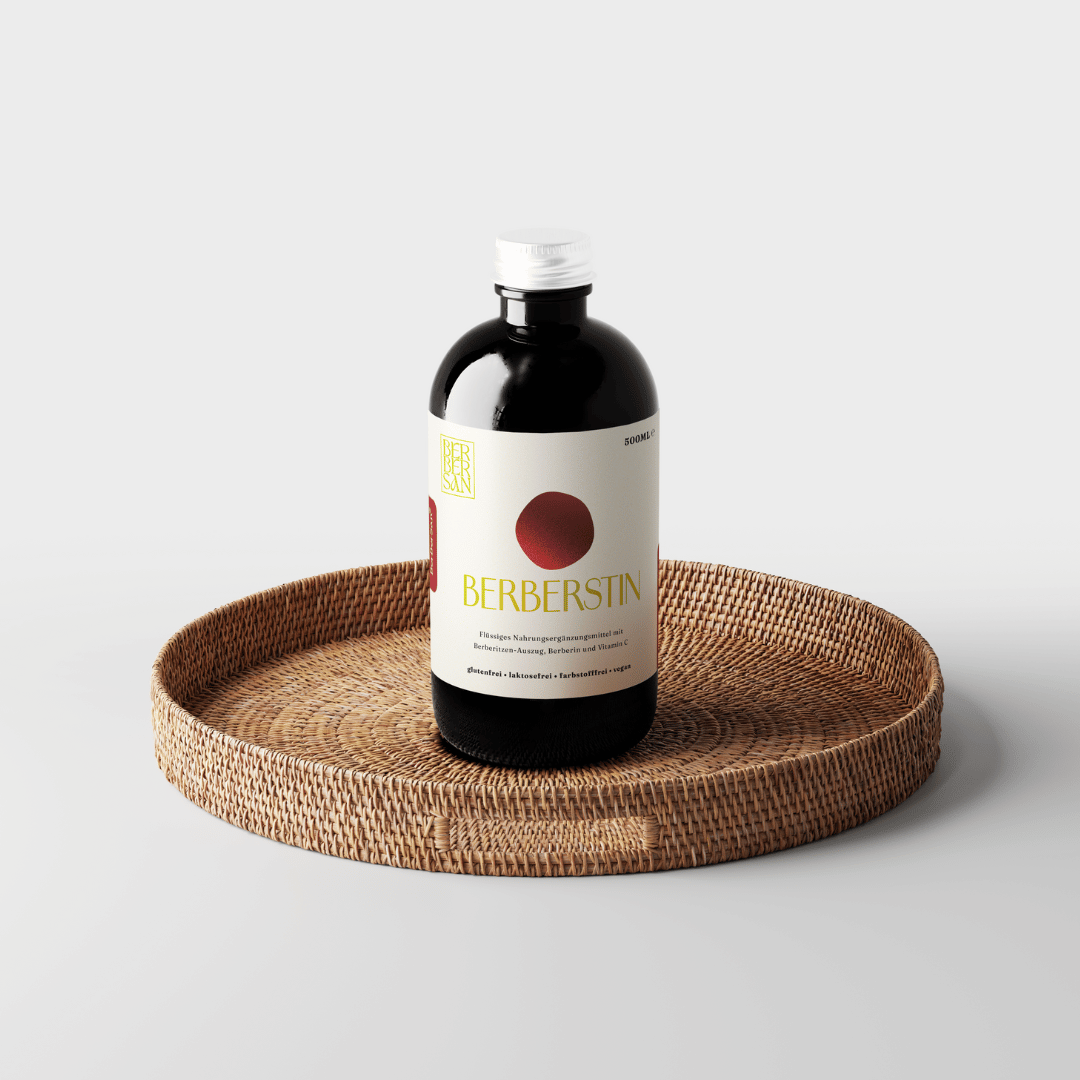
Barberry vs. berberine - why we should distinguish between them
Many people interested in BerBerSan come across two very similar terms: barberry and berberine. They are related, but not the same. Here, we'll explain the difference, the traditional significance of barberry, and what makes berberine so fascinating – without exaggeration or health claims.
1. Why are we even talking about this?
In many articles and on social media, barberry and berberine are simply lumped together. This is understandable, because the word root is the same and both come from the same plant family. But: For you as a user, it's important to know whether you're talking about a fruit or an isolated active ingredient .
2. The barberry - the traditional side
The barberry, often called sourthorn in some regions, is a shrub with bright red, tart berries. They have been used in Persian and Caucasian cuisine for centuries – many know them as Zereshk . In traditional Persian medicine, the barberry was considered a fruit that "orders," "acidifies," and supports the digestive tract.
The berries not only provide some vitamin C, but also various secondary plant compounds. They are therefore more of a natural, balanced food than a highly concentrated supplement.
Typical of the barberry:
- sour, fruity taste
- good for culinary use
- traditionally used for a long time
- natural composition of several substances
3. What exactly is a Berber woman then?
Berberine is a natural alkaloid—a single plant compound—found in several plants, including barberry. In its pure form, berberine is very bitter and yellowish in color. Because berberine can be isolated and thus precisely dosed, it is frequently used in dietary supplements.
Especially in recent years, berberine has been investigated in various studies, for example in connection with metabolic issues. This is interesting and promising, but it doesn't automatically mean that berberine is suitable for every person and every situation.
What distinguishes Berber women:
- concentrated, defined plant substance
- significantly more intense than the fruit itself
- It is often offered in capsules/tablets or liquid form.
- bitter taste, which also plays a role in plant physiology
4. Plant vs. single substance - that's the core issue
With barberries, you get the entire natural composition of the plant – everything that nature has naturally packed into the berry. With berberine, you primarily get one of these components, but in a quantity that doesn't occur naturally in the fruit.
Here's how you can remember it:
Barberry: rather mild, rather broadly based, easily integrated into dietary concepts. Berberine: narrow focus, but stronger, more like a targeted supplement.
5. Why do mix-ups happen so often?
Firstly, because the names are similar. Secondly, because some vendors don't differentiate between them precisely. And thirdly, because many readers pick up on "barberry" and "berberine" somewhere on Instagram, TikTok, or in English blogs and simply adopt the terms.
Our aim is to maintain clarity here: When we refer to the plant, we say barberry. When we refer to the substance, we say berberine. This way, you can better understand what you are consuming.
6. Traditional Perspective
In various traditional medicine systems, the red berries were used, among other things, to aid digestion, stimulate appetite, and as a "cleansing" agent. This demonstrates the long-standing value of barberries. Today, research focuses more on individual compounds—including berberine—because this allows for more precise analysis.
7. Liquid forms, juices and combinations
Liquid preparations are particularly interesting for people who have difficulty taking bitter substances in capsule form or who prefer a more natural approach. They contain the fruit base – and, depending on the product, also added berberine. Furthermore, bitter receptors are not only found in the gut but also in the mouth, making absorption via the oral mucosa an interesting option.
The important thing here is always to look at the ingredients. Not every "Barberry" is the same. And not every high number means the product is better – what matters is the overall composition and whether it suits you.
8. For whom should caution be exercised?
Even if the base is plant-based, that doesn't automatically mean "for everyone, always, in any quantity." Some groups should be cautious or speak to a doctor or pharmacist beforehand.
- Pregnant women and breastfeeding mothers
- Children under 12 years of age
- People who take medication for blood sugar or blood pressure
Isolated berberine can interact with other active ingredients. If you're unsure, it's best to ask.
9. Frequently Asked Questions
Is berberine the same as barberry?
No. Barberry is the fruit/plant, berberine is a single active ingredient found within it.
Is it enough if I only eat barberries?
The berries are a good, natural supplement. However, they don't provide the same amount of berberine that you find in an isolated supplement.
Is all of this "natural"?
Yes, it is of plant origin. But the more isolated and concentrated a substance is, the more attention should be paid to dosage and individual tolerance.
10. Conclusion
The plant and the active ingredient belong together - but they play different roles.
Barberry represents a long tradition, flavor, and natural diversity. Berberine represents the modern, specifically used plant compound. Knowing what you're dealing with makes it much easier to decide which barberry product is right for you – whether it's juice, a berry preparation, or a product with added berberine.
And that's exactly why we're explaining this in such detail here - so that you don't just buy "Berber... something", but consciously.