Alongside the amount, timing is one of the most frequently asked questions about berberine. This article explains what is common in studies and how berberine can be built into everyday life in practice.
Before or with meals?
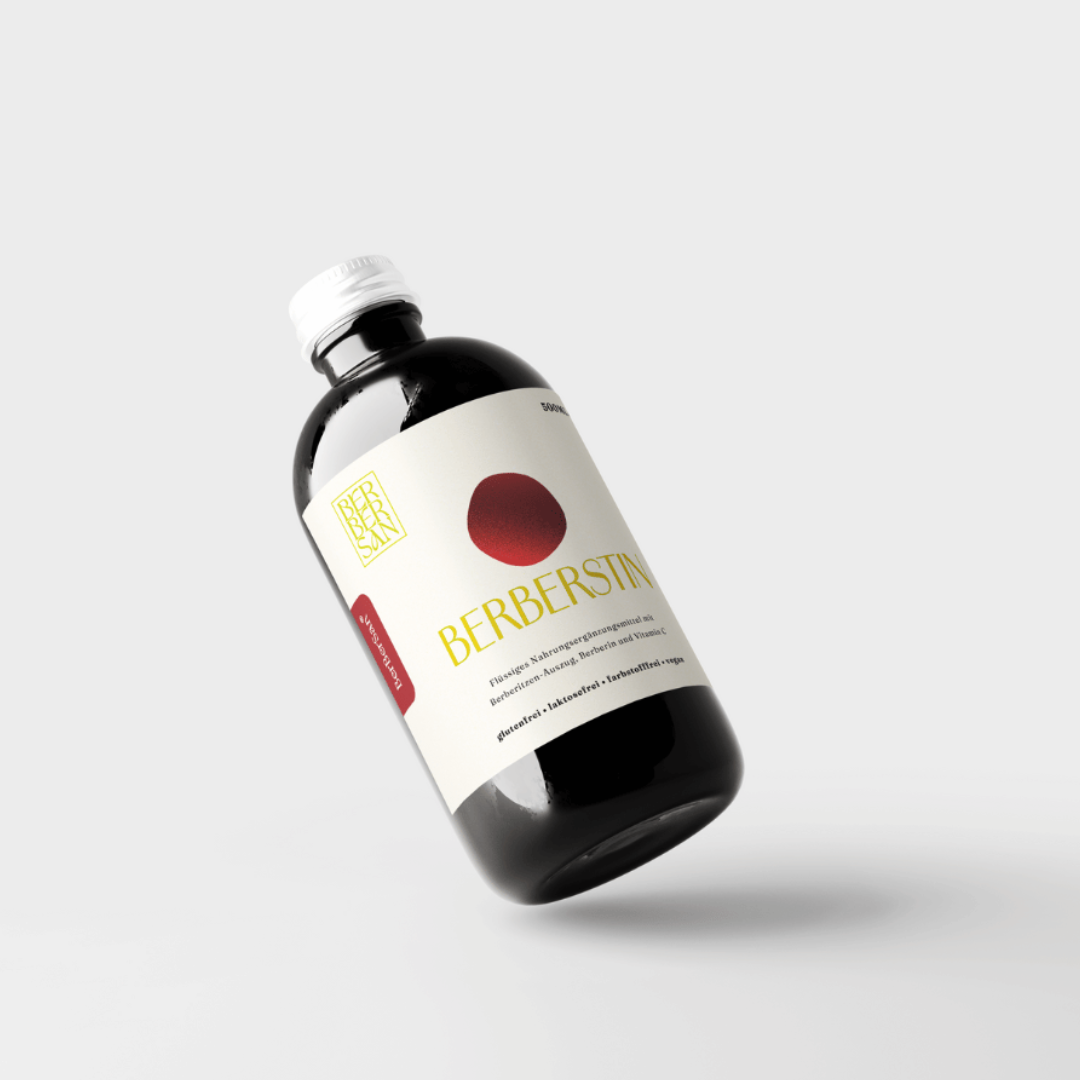
In the scientific literature, berberine is often used with or shortly before meals. The idea behind this: metabolism is particularly active around mealtimes. With a liquid barberry preparation such as Berberstin, the usual use is 15 ml in the morning on an empty stomach before the first meal. If you find this too intense, you can also take it directly with a meal instead.
Morning or evening?
Because berberine only remains in the body for a relatively short time, studies often spread intake across the day. For practical everyday use, the morning has proven itself as a fixed anchor point - a ritual that is not easily forgotten. There is no strictly “right” time of day; regularity is more important.
Start slowly
The bitter taste and the adjustment of the digestive tract in particular are reasons to start with a smaller amount and increase it over a few days. This way the body gets used to the bitter compounds, and tolerability is usually better (see “Berberine side effects”).
Regularity beats perfection
Whether morning or midday, before or with food - what matters is that berberine is integrated into everyday life regularly and over a longer period. Many experience reports refer to use over several weeks to months. A single intake says little.
When it makes sense to consult someone
If you take medication, you should agree the timing of intake with your doctor or pharmacist - in some cases a time gap to certain medicines is recommended. Details can be found in the article “Berberine and medication”.
Conclusion
Berberine is usually taken with or shortly before meals, and liquid preparations are typically taken in the morning. Most important are a slow start and regularity over a longer period. If you take medication, it is worth consulting a professional.
Note: Food supplement, not a medicinal product. This article does not replace medical advice.